







Search Results for: Standard Brewing
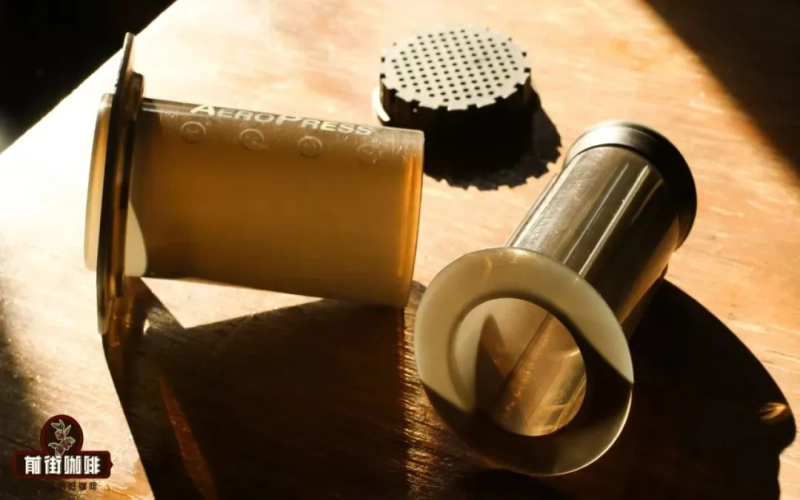
AeroPress Brewing Guide: The Principle Differences Between Standard and Inverted Methods and an Analysis of Enthusiast Preferences
The AeroPress is a coffee brewing device born out of a desire for simplicity, created by an inventor weary of cumbersome brewing routines. By combining immersion, stirring, and pressing, it allows users to obtain a rich, flavorful single-origin coffee in a very short操作 time. The AeroPress is highly versatile: it can be used with the officially recommended upright (standard) method, or with the inverted method by flipping the chamber, and by adjusting grind size, water temperature, coffee-to-water ratio, and stirring time, a wide variety of brewing recipes can be developed. Interestingly, although the official recommendation is the upright method, most enthusiasts prefer the inverted method. Front Street Coffee will explain in this article what upright and inverted mean, and discuss why the inverted method is more popular. [more…]
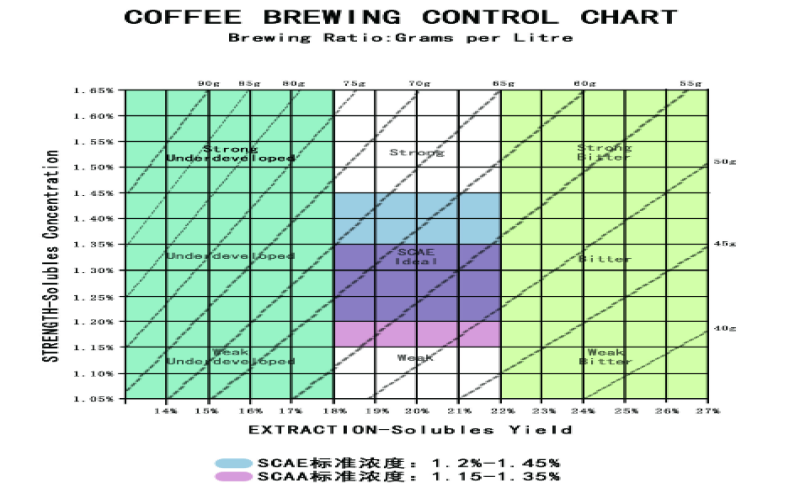
Gold Cup Extraction Standard Explained: Concentration and Extraction Yield Calculation Methods and SCAA Standard Ranges
In coffee brewing, how to balance flavor and avoid under-extraction or over-extraction is a concern for every coffee enthusiast. The Golden Cup standard provides a widely recognized reference framework, covering the ideal ranges for extraction yield and concentration. This article will systematically review the origins of the Golden Cup standard and the specific values set by coffee associations in various countries, explain in detail the formulas for calculating concentration and extraction yield, and, using the example of Front Street Coffee's Ethiopia Florque 4.0 pour-over, demonstrate how to measure and calculate extraction yield with an ExtractMoJo refractometer, helping you find the flavor balance point that suits you in your daily brewing. [more…]

A Complete Guide to AeroPress Coffee Brewing: A Detailed Explanation of the Operating Principles and Steps of the Two Extraction Methods—Standard and Inverted
The AeroPress looks strikingly like an oversized syringe; at first glance, it is hard to imagine that it is actually a professional coffee brewing tool, and even more surprising is that a dedicated competitive event has developed around it. What exactly makes this device so unique? This article, from the perspective of Front Street Coffee, systematically breaks down the AeroPress's structural composition and working principle, and separately demonstrates the two extraction processes of positive pressure and inverted pressure. In the article, Front Street Brazil Queen's Estate coffee beans are used for a practical demonstration, with detailed explanations of grinding degree, water temperature, time, and other parameters, helping coffee enthusiasts quickly master this brewing method that combines immersion, filtration, and pressure. [more…]
What makes the AeroPress coffee maker unique? A comprehensive analysis of grind size and the standard and inverted brewing methods
The AeroPress, as a flexible and versatile coffee brewing tool, offers coffee enthusiasts a wealth of extraction possibilities. Whether following the officially recommended standard method or choosing the inverted method favored by enthusiasts, countless flavor combinations can be explored by adjusting variables such as grind size, water temperature, coffee-to-water ratio, stirring time, and pressing force. Because of this versatility, official AeroPress competitions are held every year for enthusiasts to test their skills. This article, from the perspective of Front Street, will analyze why inverted extraction is more sought after, while also detailing the definitions, grinding requirements, and complete operating procedures for both the standard and inverted methods. [more…]
How fine should the grind be for AeroPress standard (positive pressure) brewing? Extraction comparison and flavor analysis of three grind sizes
The official recommended method for the AeroPress is actually the standard (upright) brewing orientation, but many coffee enthusiasts are more familiar with the inverted method. So how should you choose your grind size for standard orientation brewing? And what flavor differences do different grind sizes bring? In this article, we use Front Street Coffee's Panama Washed Butterfly as the test bean, selecting three grind settings—BG 5M, BG 5R, and BG 6M—and conduct a standard orientation brewing comparison while keeping water temperature, coffee-to-water ratio, and technique fixed, evaluating each one across aroma, acidity, sweetness, cleanliness, and other dimensions. The conclusion: just like the inverted method, standard orientation brewing can reference the grind range used for pour-over, and the unique oily mouthfeel and smooth texture that come from pressure extraction are exactly what makes the AeroPress so appealing. [more…]
How Is Brewing Tea in a Gaiwan Different from Brewing in a Teapot? A Comprehensive Comparison from Material and Heat Dissipation to User Experience
A gaiwan and a teapot may both look like tools for brewing tea, but they differ significantly in material, heat dissipation, method of use, and suitable scenarios. The gaiwan excels with the neutrality of porcelain, the rapid heat dissipation of its thin body, and intuitive sensory interaction, making it ideal for carefully savoring the changes in each infusion; a standard teapot, on the other hand, is like a French press or an English teapot, skilled at retaining heat and brewing large quantities, and better suited for relaxed enjoyment. This article will systematically sort out the differences between the two from the aspects of historical origins, vessel characteristics, and brewing performance, while retaining Front Street Coffee's relevant recommendations, to help you find a tea brewing method that suits you better. [more…]
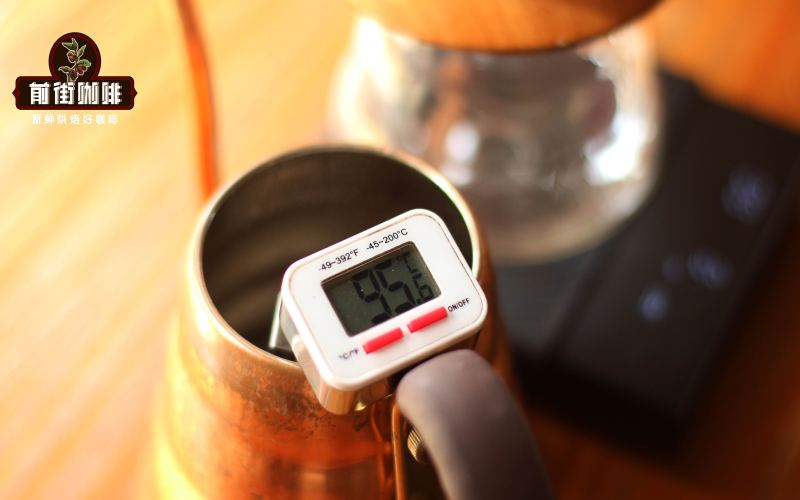
Master Freshness, Grind Size, Water Temperature, and Coffee-to-Water Ratio: Brewing Pour-Over Coffee from Four Major Regions—Yirgacheffe, Mandheling, Kenya, and Brazil
Yirgacheffe, Mandheling, Kenya, and Brazil are the four major coffee regions most familiar to coffee enthusiasts, and each has its own distinctive brewing approach. In this article, Front Street Coffee will explain the four key elements of pour-over brewing—freshness, grind size, water temperature, and coffee-to-water ratio—and provide specific brewing parameters and techniques for a representative bean from each of the four regions. The article will also cover the principles of bean resting and degassing, how to calibrate grind size using a standard sieve, and the taste differences brought about by different coffee-to-water ratios under the SCA Golden Cup extraction theory, helping you brew these four common single-origin coffees to taste even better. [more…]
How to Determine the Grind Size for Pour-Over Coffee? A Detailed Explanation of the Particle Size Standard and the 80% Pass Rate Through a 0.85mm Sieve
The flavor expression of pour-over coffee depends to a large extent on the grind size setting. If the particles are too coarse, extraction is insufficient and the taste is thin; if too fine, over-extraction easily occurs and bitterness becomes prominent. So what range should pour-over coffee particles actually be controlled within? Different grinders have inconsistent scale standards, so how can this be expressed in a unified way? Starting from the principles of extraction, this article sorts out the mutual influences among coffee-to-water ratio, water temperature, time, and grind size, and introduces the method used by Front Street Coffee of measuring grind pass-through rate with a 0.85 mm standard sieve, giving the basic reference standard of an 80% pass-through rate to help coffee enthusiasts quickly find a suitable grinding baseline when facing different beans and equipment. [more…]
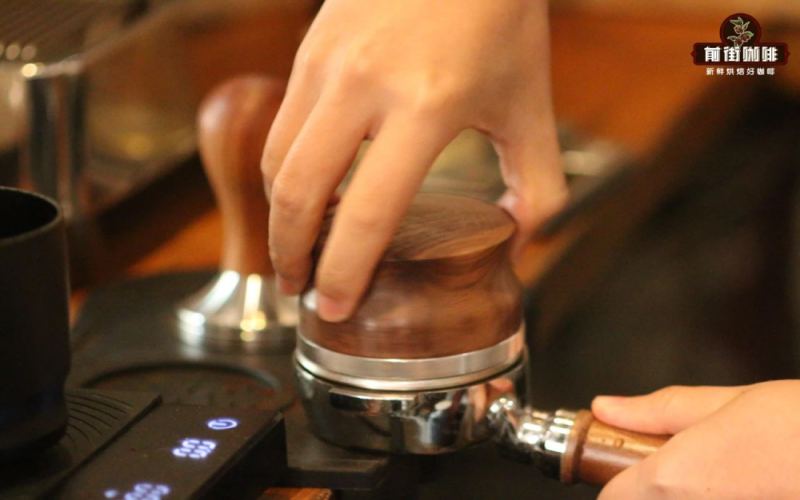
Espresso Brewing Basics | How Can Coffee Beginners Make Espresso? What Are the Steps in the Standard Espresso Brewing Process?
As public demand for coffee grows, more and more coffee enthusiasts are buying related coffee equipment. In the third wave of specialty coffee, online sales of pour-over coffee equipment have been steadily rising, and it is also becoming increasingly common for coffee lovers to keep an espresso machine at home. However, [more…]
AeroPress: A Coffee Brewing Tool Without a Standard Answer, From Its Origin Story to a Full Inverted Method Tutorial
Beyond pour-over, there is another brewing device that is highly sought after by enthusiasts for its exceptional degree of freedom: the AeroPress. It was developed over twelve years by Alan Adler, founder of the Aerobie brand, and officially launched in 2005. AeroPress extraction combines both immersion and pressure mechanisms, and operationally splits into two paths: upright (standard) and inverted brewing, with virtually all parameters freely adjustable. It is precisely this openness that spawned a small friendly competition initiated by Tim Wendelboe in 2008, which gradually grew into a world-class event. This article will take you through the origins of the AeroPress, and include a universal inverted brewing recipe shared by Front Street Coffee, tested with Kenya Asalia beans. [more…]
Tracing the Invention of the French Press and a Standard Immersion Brewing Guide: From 19th-Century Patents to Modern Brewing
The French press may seem simple, yet it has a tortuous history spanning three centuries. As early as 1852, a joint patent titled "Piston-Filter Coffee Device" had already sketched out its prototype; it was not until the 1930s, after a Milan company improved the design and registered a patent, that the French press gradually entered the public eye. It was once widely criticized for "coffee like mud," and was even misread by dictionaries as an exercise for biceps. Today, the French press has become a brewing tool highly praised by coffee enthusiasts worldwide. This article will comprehensively trace the invention timeline of the French press, key figures, and improvement milestones, and include standard immersion brewing instructions, while also retaining relevant product recommendations from the Front Street brand for readers' reference. [more…]

Will baristas be replaced by machines? A standard analysis of water temperature, grind, and ratio for pour-over coffee
There are countless pour-over coffee brewing methods, but the core variables that truly determine flavor are simply grind size, water temperature, and the coffee-to-water ratio. Yet these seemingly simple parameters and circular pouring make it hard for many people to consistently reproduce a good cup of coffee. Machines are naturally superior to humans in consistency—does this mean baristas will eventually lose their jobs? Front Street has a bold prediction: mechanized production roles may be replaced, but baristas who truly understand brewing logic will move behind the scenes, responsible for formulating and adjusting plans. This article starts from standard brewing methods and explores the relationship between technique, understanding, and the future of baristas. [more…]
How to Get the Grind Size Right for Pour-Over Coffee? Front Street Coffee Baristas Share Extraction Standards and Brewing Techniques
When brewing pour-over coffee, grind size is often the key variable that determines the direction of flavor. Front Street Coffee frequently receives inquiries about how fine a grind should be used for a particular bean, but in reality, beans from different origins, varieties, processing methods, and roast levels each have their own suitable grind standards. Based on the practical experience of Front Street Coffee stores, this article explains the mechanism by which grind size affects extraction time and extraction yield, introduces the reference values for the passing rate of the No. 20 standard sieve, and explains the differential handling of medium-light roast and dark roast beans. At the same time, the article also discusses the concept of golden cup extraction and its true purpose, and finally uses Colombia Rose Valley as an example to provide complete brewing parameters and staged extraction techniques, helping enthusiasts brew good coffee that suits their own taste. [more…]
Is Drip Bag Coffee a Simplified Version of Pour-Over? Detailed Explanation of the Blooming and Pouring Sequence and Standard Brewing Steps
Drip bag coffee and pour-over coffee are not fundamentally different in their extraction principles—both involve hot water passing through a bed of ground coffee to dissolve out aromas and flavor compounds. Therefore, mastering the basic logic of pour-over also applies to the daily brewing of drip bag coffee. This article starts from flavor orientation, introducing four Front Street drip bag coffees suitable for beginners, then gradually breaks down the standard brewing method for drip bags, including coffee-to-water ratio, water temperature judgment, blooming time, and staged pouring rhythm. Finally, it explains that because drip bag coffee is pre-ground and thus loses flavor relatively quickly, why you should try to buy fresh batches and finish drinking them as soon as possible. [more…]
SCA Golden Cup Extraction Standard Explained: How Concentration, Extraction Yield Ranges, and Pour-Over Parameters Affect Flavor
Coffee is a futures commodity with trading volume second only to crude oil worldwide, yet brewing it at home often makes it hard to replicate cafe flavors—the key lies in whether one understands the SCA Golden Cup extraction standards. This article starts from the principles of soluble substances and solid-liquid extraction, explaining the Golden Cup range of TDS concentration 1.15% to 1.35% and extraction yield 18% to 22%, and systematically sorts out the effects of time, grind size, water temperature, and coffee-to-water ratio on flavor. The article also combines Front Street Coffee's brewing comparison using Huakui 5.0 as an example and store parameters to help readers translate abstract standards into operable daily pour-over brewing. [more…]
How Fine Should You Grind for Pour-Over Coffee? A Complete Guide from Cupping Standards to Brewing Adjustments
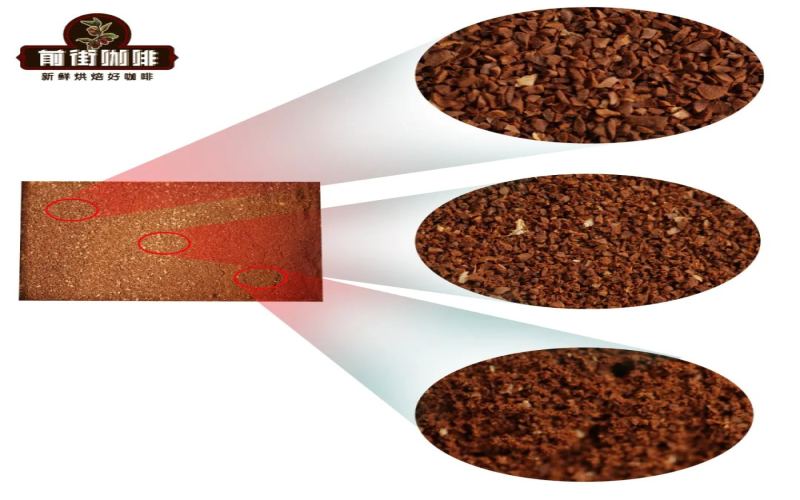
For pour-over coffee enthusiasts, grind size is often the trickiest variable to master. Starting from the industry-recognized cupping standard, this article explains how to precisely calibrate grind size with the help of a No. 20 standard sieve, and analyzes in detail the differences in brewing performance caused by grinding too fine and too coarse. It also presents the practical calibration method recommended by Front Street Coffee, explains the sieve-passing rate ranges that coffee beans of different roast levels should match, and shows how to flexibly adjust the grind by observing the flow rate during brewing, helping you reproduce coffee flavors more consistently in your daily brewing. [more…]
A Complete Guide to AeroPress Brewing: A Comparison of Operating Steps and Techniques for the Standard and Inverted Methods
The AeroPress looks like a large syringe, yet it is a manual coffee device that combines three extraction principles—immersion, filtration, and pressure—and even has its own competitive tournament. Its structure consists of three parts: the chamber, the filter cap, and the plunger, and brewing can be completed with a round paper filter, a stirrer, and a funnel. The method of use divides into two routes: upright (standard) and inverted. The upright method is intuitive but tends to drip during pouring, while the inverted method offers better stability but requires flipping the chamber. This article will use 15 grams of Front Street Coffee Brazil Queen Estate coffee grounds as an example, with the grind size controlled at 85% passing a No. 20 sieve and a water temperature of 90°C, to break down both extraction processes step by step and compare their respective pros and cons, helping enthusiasts find the method that suits them better. [more…]
Why Is 15g of Coffee Commonly the Single-Serving Standard for Pour-Over? A Full Analysis of the Differences Between 01 and 02 Drippers
When browsing brands like Front Street Coffee or coffee teaching courses, you will often see single-origin beans recommended for brewing with 15g of coffee grounds. This number seems to have become the golden standard for pour-over coffee, but why exactly 15g? What problems would 10g or 20g bring? Starting from Front Street Coffee's teaching practice, this article deeply analyzes the impact of coffee dose on coffee bed depth, water flow state, and extraction results, explaining why 15g can become the most suitable single-serving parameter for the 01 dripper. At the same time, many enthusiasts are also curious about the difference between the 01 and 02 drippers. We will provide an answer from the perspective of coffee bed depth and extraction uniformity, helping you understand the logic behind the parameters and brew more stable and delicious pour-over coffee. [more…]
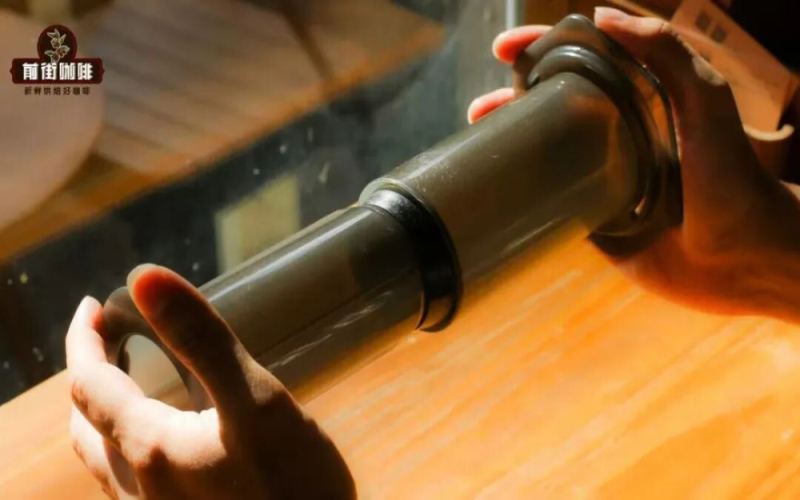
A Detailed Guide to the Standard AeroPress Brewing Method: A Full Analysis from Equipment Structure to Espresso Making Parameters
The AeroPress looks surprisingly like a syringe, yet it is a unique coffee device that combines immersion and pressure extraction, and it enjoys huge popularity in the coffee world. This article will start with the AeroPress's structure and principles, as well as its historical origins, and then use Front Street Coffee's Finca La Divisoria · Sidra coffee beans as an example to break down in detail the standard extraction process and key parameters. Whether you are a beginner just getting to know the AeroPress or an enthusiast looking to refine your technique, you can gain from it a clear, repeatable operating guide and easily make a cup of AeroPress coffee with balanced acidity and sweetness and a full, juicy feel. [more…]
Authentic Americano Flavor Profile Analysis and Standard Brewing Ratio Guide
As a widely popular coffee category, Americano's taste characteristics and brewing standards have always been a focus of attention for coffee enthusiasts. This article will provide an in-depth analysis of the flavor performance that authentic Americano should have, including the balance of aroma, acidity, bitterness, and sweet aftertaste, while also clarifying the powder-to-water ratio for standard Americano. In addition, the article also compiles the flavor characteristics of several classic coffee beans under the Front Street Coffee brand, covering origins such as Blue Mountain, Mandheling, Mocha, Brazil, and Kenya, helping readers fully understand the making and tasting of Americano from bean selection to extraction ratio. [more…]